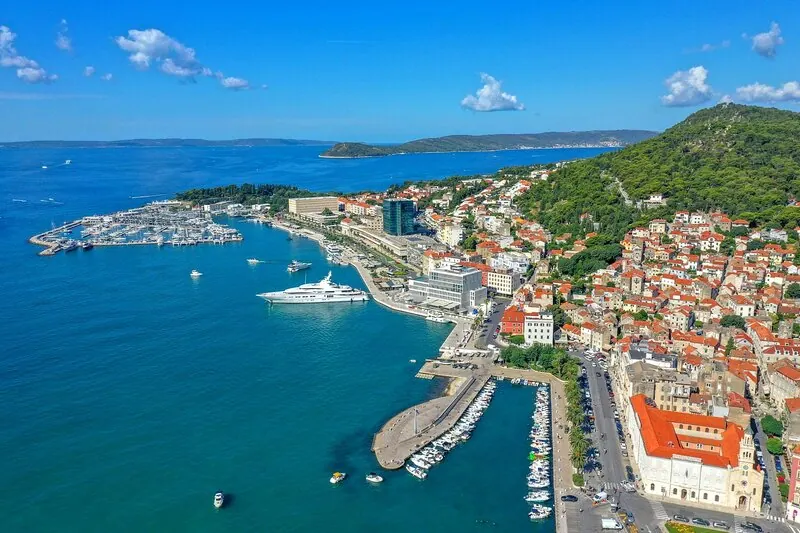
Imagine you’re the most powerful ruler in the known world – Emperor Diocletian, boss of the Roman Empire – and you get to pick anywhere for your golden years retirement pad. You choose a sunny spot on the Adriatic with crystal waters, mild breezes, and views that make gods jealous. That spot? The future site of Split, Croatia, back when it was just a nameless bay in the province of Dalmatia.
Diocletian built his massive palace here in 305 CE, and 1,700 years later, it’s still the beating heart of the city – a living, breathing UNESCO site where 3,000 people call ancient walls home. Why did he pick it? The same reasons you’ll love Split today: endless blue seas, a vibe that’s equal parts chill and charming, and that perfect mix of history whispering from every stone while modern life buzzes around it.
If you’re chasing a city break that’s part time-travel, part beach escape, Split’s your ticket. Let’s unpack why this Dalmatian darling should top your list.
Why Split Feels Like Croatia’s Coolest Coastal Hub
Split isn’t just Croatia’s second-largest city – it’s the unofficial capital of Dalmatia, where ancient vibes collide with Mediterranean ease. With around 167,000 residents (and a metro area pushing 330,000), it’s big enough for energy but small enough to explore on foot. The city’s split personality is its superpower: one minute you’re wandering Roman ruins, the next you’re sipping cocktails on a Riva promenade that rivals any Italian seaside stroll.
The weather’s a big draw – summers average 86 °F (30 °C), winters hover around 45 °F (7 °C), and you’ll get 2,600+ sunny hours a year. Shoulder seasons (May-June, September-October) are gold: seas warm enough for swims (72–77 °F / 22–25 °C), crowds thinner, prices 30% lower. July-August? Hot and happening, but pack patience for peak tourist waves.
Split’s got that effortless liveability – museums rub shoulders with beach bars, and national parks are a short drive away. It’s safe too: with a safety index of 69.1 (top-tier in Europe), you can wander day or night without worry. English is everywhere, euros make payments simple, and the locals? Warm as the sun, ready with tips over a cold Ožujsko beer.
Quick Split Cheat Sheet (The Essentials at a Glance)
- Population: ~167,000 (metro area ~330,000)
- Area: 79 km² (30 sq mi) – compact and walkable
- Climate: Mediterranean – hot summers (86 °F / 30 °C avg), mild winters (45 °F / 7 °C avg)
- Best Time: May-June or September-October – perfect weather, fewer crowds
- Currency: Euro (€) – ATMs everywhere, cards accepted widely
- Language: Croatian, but English is fluent in tourism spots
- Safety: High – top European ranking, low crime against tourists
- Airport: Split Airport (SPU) – 23 km (14 miles) from center
- Visa: No visa for US, Canada, UK, EU – up to 90 days
- Emergency Numbers: 112 (general), 192 (police), 194 (ambulance), 193 (fire)
Getting to and Around Split: Easy as a Seaside Stroll
Landing in Split is straightforward – Split Airport (SPU) is just 23 km (14 miles) west, a quick 30-minute drive from the center. Taxis run €30–40 (agree on price first to avoid surprises), or hop the shuttle bus (€4, every 30 minutes). Ubers/Bolts are cheap (€20–30) and reliable. From the airport, you’re minutes from the action – no long hauls here.
Once in town, ditch the car: the Old Town’s pedestrian-only, and everything’s walkable. The Riva promenade is your main artery – stroll it for free views and vibes. Buses (Promet, €1.50/ticket) connect beaches and suburbs; buy tickets at kiosks or via app. For islands, Jadrolinija ferries dock at the harbor – €5–20 to nearby spots like Brač.
Renting wheels? A car (€30–60/day) unlocks day trips, but parking’s a pain in peak season (€2–5/hour). Bikes (€10/day) or e-scooters (€0.20/minute via apps) are fun for the coast. Pro tip: Download the Split Tourist Board app for maps, events, and real-time bus info.
Split’s Beaches: From Urban Pebbles to Hidden Havens
Split’s beaches are the city’s secret sauce – urban edges give way to coves that feel worlds away. The water’s ridiculously clear (visibility 30–50 m / 98–164 ft), and most spots are pebbly (grab water shoes, €5–10). Blue Flag awards (over 100 nationwide) mean clean, safe swims.
Bačvice is the local legend: a rare sandy bay right in town, where picigin (water volleyball) games rage all day. It’s lively with bars (€3–5 beer), but gets packed – arrive early for sunbeds (€10/set). Kašjuni on Marjan Hill? A 20-minute walk west, pebble perfection with pine shade and cliff views. Less crowded, great for snorkeling (rent gear €10/day).
Žnjan’s the modern fave: 1 km (0.6 mile) of pebbles with playgrounds, waterslides (€5/hour), and chill lounges. Families dig the shallow entry; sunsets here are killer. Kaštelet (near Meštrović Gallery) feels artsy – pebble with sculpture views, quieter vibe. Trstenik? Urban pebble with volleyball nets, close to hotels.
Pro tip: Head to Bene on Marjan for wilder swims – rocky entry, but pine forests and trails make it adventure-ready. Water temps peak at 77 °F (25 °C) in August – ideal for lazy floats. Showers/free Wi-Fi at most; pack reef-safe sunscreen to keep those blues pristine.
The Must-Sees: Diocletian’s Palace and Beyond
Split’s attractions are like layers of a perfect cake – ancient Roman base, medieval icing, and modern sprinkles on top. At the center of it all is Diocletian’s Palace, but the city spills out with surprises around every corner. Whether you’re a history geek or just chasing those “wow” moments, here’s the breakdown of Split’s unmissables, starting with the palace and branching out to the essentials. Pro tip: Wear comfy shoes – this city’s made for wandering.
Diocletian’s Palace: The Heart of It All
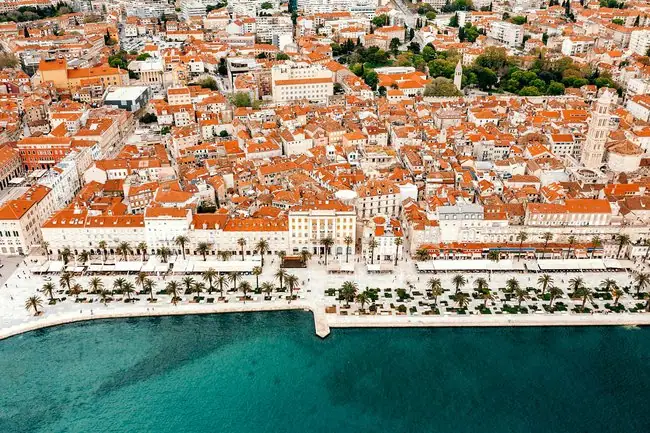
Diocletian’s Palace isn’t just a ruin – it’s Split’s living core, a UNESCO-listed maze where 3,000 people live, work, and party in over 200 buildings. Built between 295 and 305 CE as Emperor Diocletian’s retirement home, it’s one of the world’s best-preserved Roman sites, covering 39,000 sq m (420,000 sq ft). No entry fee to wander the streets – it’s free and open 24/7, but guided tours (€10–15) add juicy details like how the emperor’s mausoleum became a cathedral.
Duck into the Peristil square for those iconic vibes. The basement halls (€7 entry) are eerie and echoey, perfect for imagining Roman banquets or underground scenes from history. Check the official site for events . This palace isn’t frozen in time – it’s alive with cafés, shops, and even apartments you can rent. Start here, and let the labyrinth pull you in.
Cathedral of St. Domnius: Climb for the Views
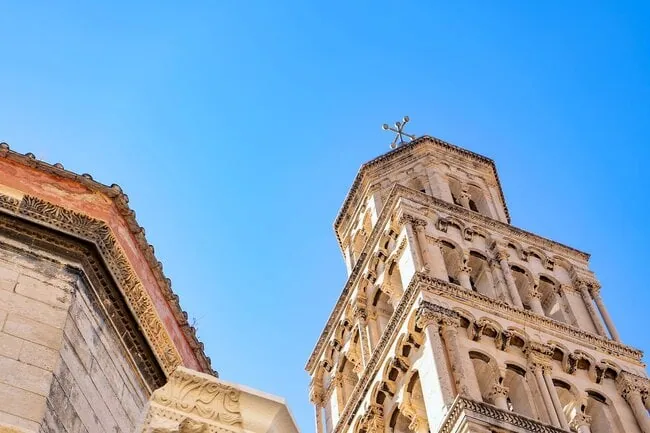
Rising from the palace’s heart, the Cathedral of St. Domnius is the world’s oldest cathedral still in use, originally Diocletian’s mausoleum from 305 CE, converted in the 7th century. Dedicated to Split’s patron saint (martyred by the same emperor – ironic, right?), it’s a mix of Roman columns, medieval altars, and baroque touches. Entry to the cathedral is €5, but the real thrill is climbing the 57 m (187 ft) bell tower (€3) for 360° views over red roofs, the sea, and Marjan Hill.
The ascent’s steep – 200+ steps, narrow in spots – but the panoramas are worth every huff. Inside, spot the 13th-century wooden doors carved with Bible scenes. Visit early to beat crowds. If heights aren’t your thing, the treasury (€3) holds relics and artifacts that feel like a mini time capsule.
Gregory of Nin: Rub for Luck
Just outside the palace’s Golden Gate stands the massive statue of Gregory of Nin (Grgur Ninski), a 10th-century Croatian bishop who fought for local language in church services. Sculpted by Ivan Meštrović in 1929, this bronze giant towers 8.5 m (28 ft) tall – one of the city’s most iconic landmarks. Locals and tourists rub his big toe for good luck (it’s polished shiny from millions of touches), promising wishes granted or safe travels.
Gregory symbolizes Croatian identity – he defied Rome to use the vernacular, a big deal back then. The statue’s in a prime spot for photos, near the palace entrance. No entry fee – just stroll by and give it a rub. Fun fact: There are smaller replicas in Nin and Varaždin, but Split’s is the original showstopper.
The Riva Promenade: Split’s Living Room
No Split visit’s complete without a stroll on the Riva – the city’s waterfront promenade, a 250 m (820 ft) marble-paved beauty lined with palm trees, cafés, and benches overlooking the harbor. Rebuilt in 2007, it’s where locals sip morning coffee (€2–3), families grab gelato (€2/scoop), and everyone watches ferries glide in at sunset. It’s the social hub – think people-watching paradise with a side of sea breeze.
In summer, the Riva hosts free concerts and markets; year-round, it’s ideal for that leisurely walk after palace exploring. Grab a seat at a café like Luxor for live music (€5 drinks). Pro tip: Come at dusk when the lights flicker on – pure magic without the midday heat.
Marjan Hill: Your Green Escape
Marjan Hill’s your breath of fresh air – a forested peninsula rising 178 m (584 ft) west of the Old Town, dubbed Split’s “lungs” for its pine-scented trails and sea views. This nature reserve offers easy hikes (30 minutes to the summit, free access) through fragrant woods, past ancient chapels like St. Nicholas (13th century). The Vidilica viewpoint at the top? Panoramas that beat any drone shot, with the city, islands, and Adriatic laid out below.
Attractions dot the paths: the Jewish Cemetery (oldest Sephardic in Europe), rock-climbing walls, and beaches like Bene (pebble with playgrounds). The Meštrović Gallery (€10 entry) showcases Ivan Meštrović’s sculptures in his former villa – think life-sized bronzes with sea backdrops. Hike from Varoš stairway or drive to parking lots (€2/hour). Marjan’s vibe? Peaceful reset after palace crowds – pack water and picnic for a full afternoon.
Beyond the Center: Klis Fortress and Quirky Finds
Venture 15 km (9 miles) north to Klis Fortress (€10 entry) – a medieval stronghold perched on a cliff, famous as Meereen in Game of Thrones. Climb the walls for epic views over Split and the sea; it’s a 30-minute drive (€10 taxi) or bus (€3). History buffs love the Ottoman-era tales; kids dig the knight vibes.
Back in town, the Froggyland Museum (€13–15 entry, froggyland.net) is Split’s quirkiest stop – over 500 stuffed frogs in human scenes (school, circus, court). It’s oddball fun, 10 minutes from the palace. The Ethnographic Museum (€3) inside the palace packs folk costumes and tools into cozy rooms. Split’s beyond-palace gems? They add that unexpected twist to your itinerary.
These must-sees weave Split’s story – from Roman roots to modern quirks. Start with the palace, then fan out; you’ll see why Diocletian never left.
Food & Drink: Split’s Flavor Fiesta
Split’s eats are pure Adriatic joy: fresh, simple, seaside-fresh. Seafood stars – buzara mussels in white wine (€12–18), grilled sea bream (€15–20/person). Try gregada (fish stew) in Old Town konobas like Konoba Matejuška. Inland twist: soparnik (garlic-spinach pie, €5/slice) from markets.
Dalmatian classics: pršut (air-dried ham, €10/plate) and paški sir (sheep cheese from Pag, €8). Pair with Plavac Mali red (€5/glass) or Babić white. Craft beer? Split Brewery’s taproom (€4/pint). Vegetarians: Grilled veggies with olive oil (€8), maneštra soups (€6).
Sweet spots: Rožata custard (€4) or fritule doughnuts (€3). Markets like Pazar burst with figs, olives – picnic heaven. Pro tip: Eat after 8 p.m. like locals; Riva cafés for people-watching coffee (€2–3). Budget meal €10–15, fancy dinner €30–50/head.
Nightlife: From Sunset Sips to Sunrise Beats
Split’s nights start slow, end epic. The Riva promenade’s your opener – sunset aperitivos at bars like Academia Club Ghetto (€5 cocktail). Old Town alleys hide gems: Marvlvs Library Jazz Bar for live music and craft cocktails (€6–10). Georgy’s a cozy pub with local beers (€4).
Clubs kick in late: Central Club packs electronic beats (€10 entry), Vanilla’s open-air for summer raves (€15–20 with DJs). Inbox Bar’s beachfront – day lounge to night frenzy (€5 drinks). For chill: Teraca Vidilica on Marjan – fortress views, €6 wine.
Summer amps it: Ultra Europe festival (July, €150 tickets) brings EDM giants. Billiard Split & Pizzeria for low-key pool (€5/game). Split’s nightlife? Inclusive, vibrant – from jazz lounges to beach parties, all walkable.
Festivals & Events: Split’s Year-Round Party Calendar
Split pulses with events – here’s the 2025/2026 lineup:
- Feast of St. Duje (May 7): City’s patron saint day – processions, concerts, fireworks (free).
- Mediterranean Film Festival (June): Indie films from Med countries (€5–10/ticket).
- Ultra Europe (July): EDM extravaganza at Poljud Stadium (€150–300 passes).
- Split Summer Festival (July-August): Open-air opera, ballet in palace (€20–50).
- Split Jazz Festival (August): Free squareside jams.
- Split Film Festival (September): Art-house screenings (€5–10).
- Carnival (February): Costumes, parades (free street fun).
- Dubrovnik Winter Festival (November-December): Nearby, but easy day trip – markets, lights (free entry).
Pro tip: Book tickets early for Ultra; most events are walk-up friendly.
Day Trips from Split: Expand Your Horizons
Split’s your launchpad – buses, ferries, tours make escapes easy.
- Krka National Park (1 hour, €20 bus): Swim under waterfalls, hike trails (€30 entry).
- Plitvice Lakes (2.5 hours, €40 bus): 16 terraced lakes, UNESCO magic (€40 entry).
- Hvar Island (1 hour ferry, €10): Lavender fields, beach bars (Hula Hula for sunsets).
- Trogir (30 minutes, €3 bus): Mini-Venice UNESCO town, gelato heaven.
- Klis Fortress (20 minutes, €10 taxi): Thrones filming spot, panoramic views (€10 entry).
- Blue Cave & Pakleni Islands (full-day boat €80): Glowing grotto, snorkeling coves.
- Šibenik (1 hour, €5 bus): Cathedral UNESCO, medieval fortress (€3).
Pro tip: Organized tours (€50–100) include transport – book via GetYourGuide or Viator for hassle-free.
Where to Stay: From Palace Pads to Beach Bunks
Split’s digs suit all budgets (2025 prices, book early).
Budget: Hostels like Outlanders Tribe (€30–50/night) – dorms with AC, Old Town location. Mid-range: Hotel Globo (€80–150) – comfy rooms, breakfast included. Luxury: Cornaro Hotel (€200–400+) – rooftop spa, palace views. Unique: Apartments in Diocletian’s Palace (€100–200) – live like royalty.
Pro tip: Shoulder season drops 30–50%; Airbnb for kitchens (€60–120).
Practical Tips: Stay Safe, Smart, and Satisfied
Split’s safe (high global ranking), but watch pockets in crowds. Tap water’s drinkable, Wi-Fi free everywhere. Taxis: Bolt/Uber €5–10 rides. Tipping: 10% at restaurants. Health: EU standards, pharmacies 24/7. Eco-tip: Use reusable bottles – fountains abound.
Why Split Steals the Show (and Your Heart)
Split’s that rare city where a Roman emperor’s whim turned into your dream getaway – a place where 1,700-year-old walls cradle buzzing bars, and every alley leads to a new surprise. You come for the palace, stay for the beaches, and leave plotting your return to those sunset Riva strolls.
It’s the effortless blend: history that feels alive, food that tastes like sunshine, and vibes that shift from relaxed day dips to electric nights. Whether you’re family-hopping islands or solo-chasing adventures, Split delivers without trying too hard.
One more thing: Split’s just the start – sneak south to Montenegro for that raw Adriatic edge. But here’s the truth – once you’ve tasted Split’s magic, every other coastal town feels a bit… ordinary. So grab that ferry ticket, pack the sunscreen, and dive in. Split’s waiting with open gates and endless blue. Cheers to new memories!