What if the sea could sing you a lullaby and the sun could light up your path like a cosmic disco ball? In Zadar, that’s not fantasy – it’s everyday reality, thanks to innovative art installations that turn nature into a symphony. This coastal charmer marks the northern gateway to Dalmatia, blending ancient Roman echoes with modern whimsy in a way that feels effortlessly enchanting.
Zadar’s got that quiet confidence: a city of 70,000 souls where history whispers from medieval churches, beaches invite lazy afternoons, and sunsets paint the sky like they’re auditioning for a postcard. If you’re seeking a spot that’s equal parts serene and surprising – with islands a short ferry away and national parks within day-trip reach – Zadar, Croatia, might just be your new favorite hideaway.
Let’s explore why this underrated gem deserves a spot on your travel radar.
Why Zadar Stands Out as Dalmatia’s Northern Star
Zadar isn’t the flashiest name on Croatia’s coast – and that’s exactly its appeal. It’s the kind of place where you can start your day with a coffee overlooking Roman ruins and end it with a beachside cocktail, all without the shoulder-to-shoulder crowds of its southern siblings. With roots stretching back 3,000 years to Illyrian tribes, Zadar’s layered past – Roman port, medieval stronghold, Venetian jewel – shines through in every stone-paved street.
The climate here is classic Mediterranean bliss: summers averaging 77–86 °F (25–30 °C), winters mild at 41–50 °F (5–10 °C), and over 2,600 sunny hours a year to keep things bright. Shoulder seasons (May-June, September-October) offer warm seas (68–75 °F / 20–24 °C) and fewer visitors, making it ideal for relaxed explorations. Zadar’s rising as a tourism hot spot, drawing around 500,000 visitors annually, yet it retains that authentic local feel – think fishermen mending nets beside trendy art galleries.
What sets it apart? Those bold public artworks like the Sea Organ and Greeting to the Sun, turning the waterfront into an interactive canvas. It’s safe (top European rankings), English-friendly, and budget-smart: a seaside meal for two costs €30–50, local beer €3–4. Zadar’s your launchpad for northern Dalmatia’s wonders – close enough to islands and parks for spontaneous adventures, far enough from mass tourism to breathe easy.
Quick Zadar Cheat Sheet (The Essentials at a Glance)
- Population: ~70,000 (metro area ~90,000)
- Area: 25 km² (9.65 sq mi) – compact and easy to navigate
- Climate: Mediterranean – warm summers (77–86 °F / 25–30 °C avg), mild winters (41–50 °F / 5–10 °C avg)
- Best Time: May-June or September-October – ideal weather, lighter crowds
- Currency: Euro (€) – ATMs plentiful, cards widely accepted
- Language: Croatian, with English common in tourism areas
- Safety: High – low crime rates, safe for solo travelers
- Airport: Zadar Airport (ZAD) – 8 km (5 miles) from center
- Visa: No visa for US, Canada, UK, EU – up to 90 days
- Emergency Numbers: 112 (general), 192 (police), 194 (ambulance), 193 (fire)
Where in the World Is Zadar?
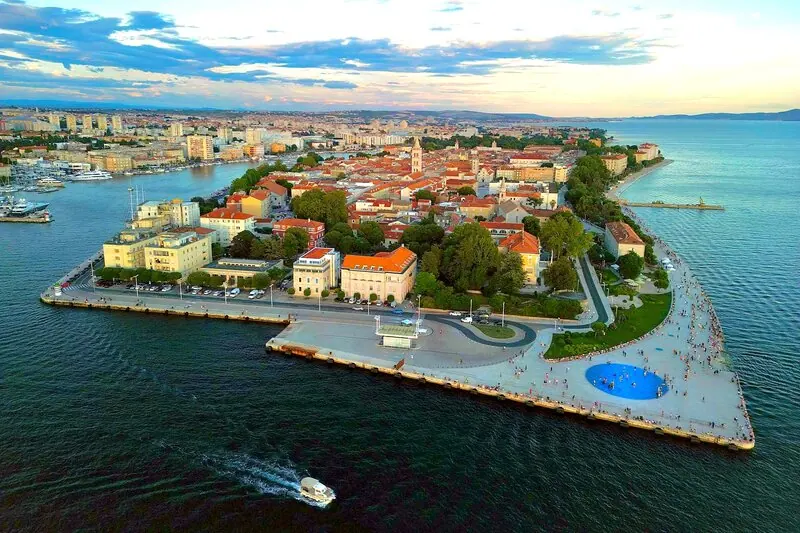
Zadar hugs Croatia’s northern Dalmatian coast like a well-kept secret, positioned where the Adriatic’s blues meet limestone cliffs and olive-dotted hills. It’s in northwestern Dalmatia, about 160 km (100 miles) north of Split and 290 km (180 miles) northwest of Dubrovnik, making it a perfect starting point for coastal road trips. To the east, the Velebit Mountains stand guard, while out west, a archipelago of islands dots the horizon – Ugljan and Pašman just a bridge away.
Geographically, Zadar’s peninsula juts into the sea, creating sheltered bays and a harbor that’s been bustling since Roman times. The Dinaric Alps loom inland, adding that dramatic backdrop of peaks up to 1,757 m (5,764 ft). Think of it as the northern door to Dalmatia’s sun-soaked wonders – warmer and drier than Istria up north, but with a touch more wind (bura gusts keep summers fresh).
For travelers eyeing the Balkans, Zadar’s a smooth segue south. Drive 300 km (186 miles) along the coast, and you’re in Montenegro – its natural extension, where the Adriatic gets wilder and the mountains steeper. Many pair the two for an epic itinerary: Zadar’s artistic flair leading into Montenegro’s raw beauty. In essence, Zadar’s that sweet coastal crossroads where history, sea, and adventure converge – come for a weekend, stay for the stories.
Getting to and Around Zadar: Smooth Sailing from Start to Finish
Zadar’s accessibility is a big win – Zadar Airport (ZAD) sits just 8 km (5 miles) east, a 15-minute drive from the center. Taxis cost €15–25 (fix the price upfront), or grab the shuttle bus (€4, every 30 minutes). Ubers/Bolts run €10–15 and are app-easy. From the airport, you’re downtown in no time – no jet-lag marathons here.
In town, forget cars: the Old Town’s car-free, and sights are stroll-friendly. The Riva promenade is your main vein – walk it for harbor views. Buses (Liburnija, €1.50/ticket) link beaches and suburbs; buy at kiosks or via app. For islands, Jadrolinija ferries depart from the harbor – €5–15 to nearby Ugljan or Dugi Otok.
Renting? A car (€30–60/day) opens day trips, but parking’s tricky in summer (€1–2/hour). Bikes (€10/day) or e-scooters (€0.20/minute via apps) suit the flat coast. Pro tip: Download the Zadar Tourist Board app for maps, events, and real-time transport info. Getting around’s a breeze – more time for sunsets, less for stress.
Practical Tips: Stay Smooth and Savvy in Zadar
Zadar’s safe (high European ranking), but watch pockets in crowds. Tap water’s drinkable, Wi-Fi free everywhere. Taxis: Bolt/Uber €5–10 rides. Tipping: 10% at restaurants. Health: Pharmacies 24/7. Eco-tip: Use reusable bottles – fountains abound.
Zadar’s Must-Sees: From Wave Symphonies to Ancient Gates
Zadar’s attractions pack a punch – blending innovative art with centuries-old stones in a way that’s uniquely captivating. Start with the waterfront wonders, then dive into the historic core. Each spot tells a piece of Zadar’s story, from Roman roots to modern marvels.
Sea Organ: Nature’s Waterfront Concert
Zadar’s Sea Organ is pure genius – an architectural instrument where waves push air through 35 underwater pipes, creating haunting melodies that shift with the tide. Installed in 2005 by Nikola Bašić, it’s a 70 m (230 ft) stretch of marble steps on the Riva, free to experience anytime. Sit, listen, and let the sea serenade you – it’s hypnotic, especially at sunset when the notes mingle with lapping water.
No ticket needed; just wander over. Pair it with a nearby café for coffee (€2–3) while the “music” plays. This isn’t just art – it’s Zadar’s way of reminding you nature’s the best composer.
Greeting to the Sun: Solar-Powered Light Show
Right next to the Sea Organ, Nikola Bašić’s Greeting to the Sun is a 22 m (72 ft) diameter circle of 300 solar panels that soak up daylight and unleash a colorful light dance after dusk. Installed in 2008, it syncs with the Sea Organ for a multisensory spectacle – patterns pulse like a cosmic disco, reflecting the planets’ orbits.
Free and family-friendly; arrive at twilight for the full effect. It’s eco-smart too – powers nearby lights. Pro tip: Lie on the warm glass for a glow-from-below vibe – kids (and inner kids) love it.
Church of St. Donatus: Zadar’s Iconic Round Wonder
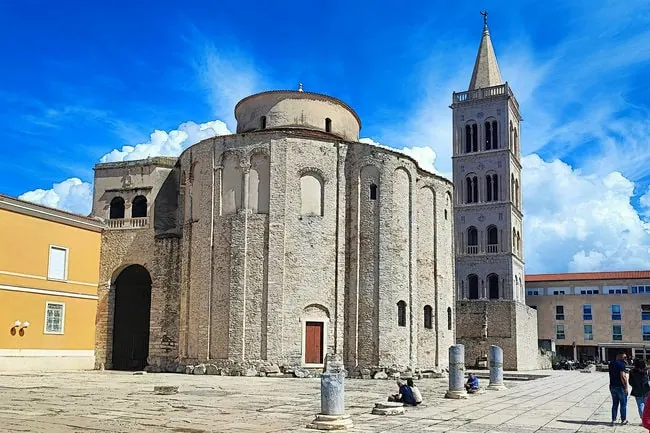
The 9th-century Church of St. Donatus is Zadar’s architectural star – a massive circular pre-Romanesque building made from recycled Roman stones, standing 27 m (89 ft) tall. No longer a church, it’s now a concert venue with acoustics that make choral music soar (€3 entry). Climb the interior for views over the Roman Forum ruins below.
Built on Roman foundations, it’s one of Europe’s oldest intact churches. Nearby, the Archaeological Museum (€5) displays artifacts from the site – a perfect history combo.
People’s Square and City Gates: Medieval Meets Modern
People’s Square (Narodni Trg) is Zadar’s social hub – a 16th-century plaza with the City Guard House (now Ethnographic Museum, €3) and clock tower. Grab a bench, watch locals sip coffee, and soak the vibe. From here, explore the Land Gate – Michele Sanmicheli’s 1543 Renaissance masterpiece with Venetian lions and reliefs (€ free to admire).
The Sea Gate, rebuilt in 1573, bears a Lepanto battle memorial. Walk the walls for harbor panoramas. These gates frame Zadar’s story – Venetian influence meets Croatian pride.
Church of St. Simeon: Silver Reliquary Masterpiece
The 17th-century Church of St. Simeon houses a stunning silver reliquary from 1380, crafted by Francesco da Milano – a 2 m (6.5 ft) chest with reliefs of the saint’s life (€ free entry, donations welcome). The baroque interior adds gold-leaf drama.
It’s a quiet gem amid the buzz – perfect for a reflective pause.
Zadar’s must-sees? They layer art, history, and innovation into a compact package – explore on foot for the full effect.
Zadar’s Beaches: From Urban Dips to Island Escapes
Zadar’s beaches offer that perfect mix of convenience and calm – pebbly shores with clear waters (visibility 30–50 m / 98–164 ft), most Blue Flag certified for cleanliness. Summers bring 77–82 °F (25–28 °C) seas; pack water shoes for comfort.
Borik’s the urban favorite: 1 km (0.6 mile) of pebbles with pines, playgrounds, and cafés – family heaven, sunbeds €10/set. Kolovare, closer to town, has volleyball nets and shallow entry – lively but relaxed. Diklo, 5 km (3 miles) north, feels more local – pebble with grassy spots, quieter vibes.
For sand seekers, head to Nin’s Queen’s Beach (15 km / 9 miles north) – therapeutic mud baths, shallow lagoon. Sakarun on Dugi Otok (ferry €5) is a white-sand stunner with pine shade. Pro tip: Rent kayaks (€10/hour) for cove exploring. Zadar’s beaches? Easy access, endless blue – ideal for mixing city days with sea soaks.
Food & Drink: Zadar’s Fresh Adriatic Flavors
Zadar’s dining scene is all about fresh, local bites – seafood straight from the boats, paired with regional wines. Try gregada fish stew (€12–18) or brudet (spicy seafood mix, €15) in konobas like Foša. Lamb under the bell (peka, €20/person) is a hearty inland classic.
Markets burst with paški sir cheese (€10/wedge) and pršut ham (€15/plate). Sip Maraschino liqueur (€4/glass), a cherry delight from local distilleries. Craft beer at The Garden Lounge (€4/pint). Vegetarians: Grilled veggies with olive oil (€8). Sweets: Rožata custard (€3).
Pro tip: Eat at markets for picnic deals – figs, olives fresh. Budget meal €10–15, nicer dinner €30–50/head.
Nightlife: From Sunset Strolls to Late-Night Beats
Zadar’s evenings start mellow on the Riva – sunset drinks at Ledana Lounge (€5 cocktail). Old Town bars like Arsenal offer live jazz (€ free entry). For energy, The Garden’s open-air venue hosts DJs (€10–20 events).
Clubs like Kultura pulse with electronic beats (€10 entry). Beach bars at Borik keep it casual – beer €3–4. Zadar’s nightlife? Relaxed yet lively – from acoustic sets to dawn dances, all walkable.
Festivals & Events: Zadar’s Year-Round Calendar
Zadar buzzes with events.
- Night of the Full Moon (July): Lantern-lit streets, free concerts.
- Zadar Outdoor Festival (May): Sports, music in parks (free–€20).
- Zadar Dreams (July-August): Theater in historic spots (€10–20).
- Garden Festival (nearby, June): Electronic music on beaches (€50–100 passes).
- Feast of St. Donatus (August): Processions, fireworks (free).
- Zadar Jazz Festival (September): Free squareside jams.
- Advent in Zadar (December): Markets, lights (free).
Pro tip: Book for Garden early; most are walk-up.
Day Trips from Zadar: Nature and Islands Await
Zadar’s your base for escapes – buses/ferries make it simple.
- Plitvice Lakes (2 hours, €40 bus): 16 terraced lakes, UNESCO (€40 entry).
- Krka National Park (1 hour, €20 bus): Swim under waterfalls (€30 entry).
- Dugi Otok (45 min ferry, €5): Sakarun beach, Telašćica bay.
- Nin (15 min, €3 bus): Smallest cathedral, mud beaches.
- Paklenica NP (45 min, €10 bus): Hiking canyons (€10 entry).
- Ugljan Island (20 min ferry, €3): Olive groves, quiet coves.
- Pag Island (1 hour, €5 bus): Cheese tasting, lunar landscapes.
Pro tip: Organized tours (€50–100) include transport.
Where to Stay: From Budget Nests to Seaside Splurges
Zadar’s options fit all wallets (2025 prices).
Budget: Hostels like Boutique Hostel Forum (€30–50/night) – central, clean dorms. Mid-range: Hotel Kolovare (€80–150) – sea views, pool. Luxury: Falkensteiner Hotel Adriana (€200–350+) – spa, beach access. Unique: Apartments in Old Town (€100–200) – historic charm.
Pro tip: Shoulder season cuts 30–50%; check for sea-view upgrades.
Wrapping It Up: Why Zadar Wins You Over Quietly
Zadar’s that understated friend who surprises you with hidden talents – a city where waves compose tunes and sunsets light up like art installations. You come for the quirky sights, stay for the easy rhythm of beaches and history, and leave with a mental playlist of moments: that first Sea Organ melody, a sunset stroll on the Riva, or a day trip to waterfalls that feel like nature’s spa.
It’s not the loudest spot on Croatia’s coast, but that’s the beauty – Zadar lets you set the pace, whether it’s island-hopping or market meandering. With its blend of ancient whispers and modern whims, it’s the perfect northern Dalmatian intro, teasing what’s south while standing strong on its own. But here’s the deal – Zadar’s subtle charm lingers longest. Until next time, keep chasing those sunsets.